Your Brain Clocks Out at 2:47 P.M. — Here's How to Clock It Back In
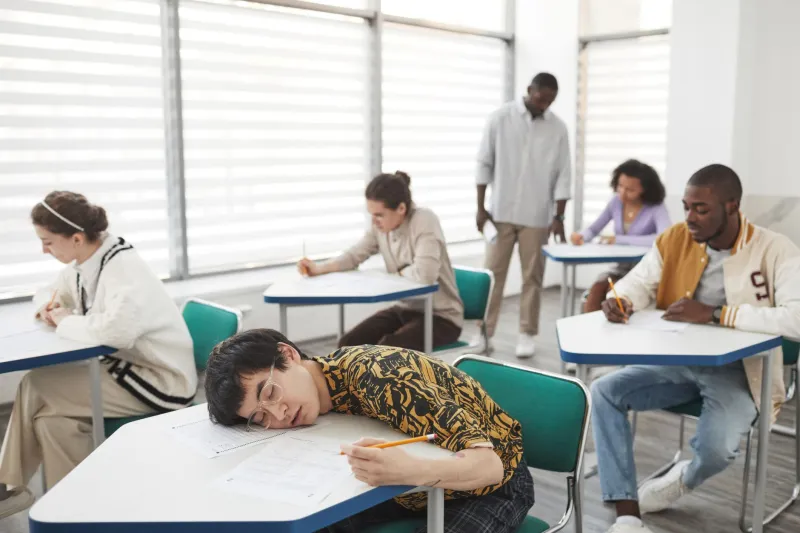
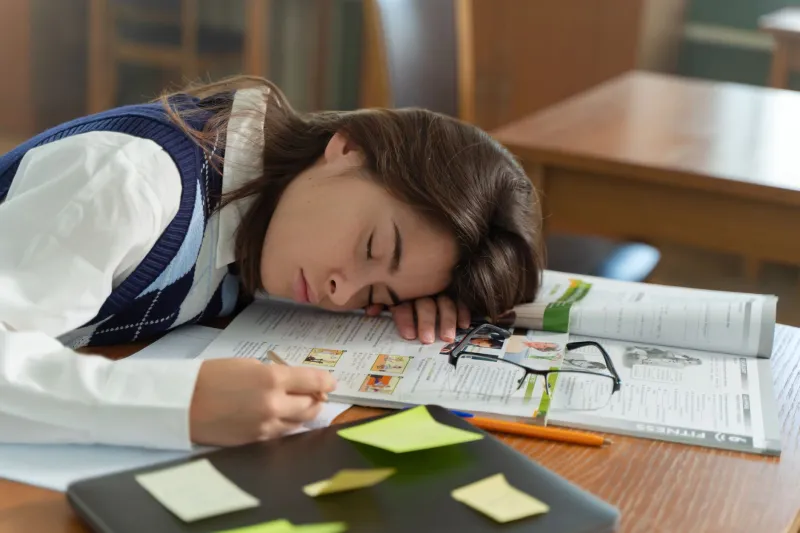
There's a moment every American student knows intimately. It's somewhere around 1:30 or 2 p.m. — the fluorescent lights seem harsher, the teacher's voice turns into white noise, and the worksheet in front of you might as well be written in Sanskrit. Welcome to the afternoon slump, the least glamorous but most universal phenomenon in American education.
Here's the twist: it's not a character flaw. It's neuroscience.
The Biology of the 2 P.M. Brain Fog
Researchers who study circadian rhythms have identified a genuine dip in alertness in the early-to-mid afternoon — sometimes called the "post-lunch dip." Even people who skip lunch experience it, which tells scientists it's not just about digesting a slice of cafeteria pizza. Your internal clock naturally downshifts alertness in the early afternoon, roughly 12 to 16 hours after your sleep midpoint.
For teenagers, it's worse. Adolescent circadian rhythms run later than adults', which is one reason the American Academy of Pediatrics has pushed for later high school start times. A teen whose body wants to sleep at midnight and wake at 8 is operating on a serious sleep deficit by seventh period — and then the afternoon dip stacks on top.
The result? The final hours of the school day are fighting biology itself. But biology can be outsmarted, at least a little.
Quick Wins You Can Use Tomorrow
Move before you grind. Even a two-minute walk — to the water fountain, around the hallway, up a flight of stairs — measurably boosts alertness. One study out of California found brief walking breaks improved students' on-task behavior. If you're a student, stand up and stretch between assignments. If you're a teacher, build a 60-second movement break into the period. It feels like lost time; it's actually buying back focus.
Hydrate, for real. Mild dehydration — as little as 1–2% of body weight — is linked to fatigue and reduced concentration. That's before accounting for the third iced coffee. Keep a water bottle on the desk and sip consistently through the afternoon.
Sequence smart, not hard. Don't schedule your hardest subject — AP Chem, we're looking at you — for the dead zone. Save demanding, novel work for your personal peak hours (for most teens, late afternoon and evening) and use the slump window for review, practice problems, or group work that requires participation rather than pure absorption. In study sessions, put the material you already kind of know first and the genuinely hard stuff later, when your alertness rebounds.
Eat lunch like it matters. A lunch built around refined carbs and sugar produces a glucose spike and crash that amplifies the dip. Pairing protein, fiber, and complex carbs — a turkey sandwich on whole grain with an apple beats a bag of chips and a soda — flattens that curve.
Use light strategically. Dim, cave-like classrooms worsen drowsiness. If you control your environment, get bright light — ideally daylight — during the afternoon. A 2017 study found students in daylit classrooms tested measurably faster on cognitive tasks.
What Schools Are Trying
Some districts aren't leaving it to individual willpower. A growing number are restructuring the day entirely:
- Electives after lunch. Scheduling art, band, PE, or journalism in the afternoon slots puts engaging, hands-on courses exactly where lecture-based learning struggles. Several schools experimenting with this report fewer disciplinary referrals in seventh period.
- Later start times. Dozens of districts from Seattle to Denver have shifted high school start times past 8:30, betting that better-rested students handle the afternoon better too.
- Built-in movement. Some middle schools have adopted standing breaks or brief brain-break routines between afternoon classes.
None of these are magic. But together they acknowledge something schools historically ignored: the schedule should work with students' biology, not against it.
The Takeaway
The afternoon slump isn't going anywhere — it's baked into human physiology. But whether you're a student staring down sixth period or a teacher staring down sixth period (solidarity), you have options. Move your body, drink water, sequence your tasks around your energy, and push for structural changes where you can.
Every school day counts. Even — especially — the ugly ones at 2:47 p.m.