Stop Waiting for the Envelope: Why Report Cards Are a Rearview Mirror, Not a Roadmap
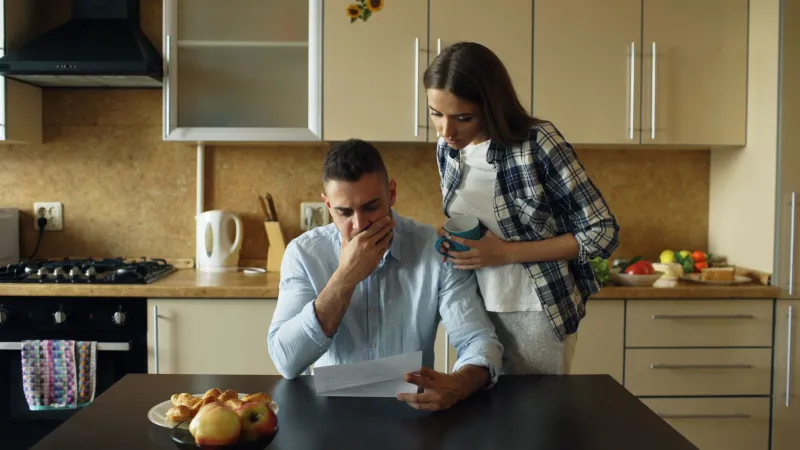
There's a particular kind of dread that arrives with the report card. In most American school districts, it shows up six to nine weeks after the learning it's describing has already happened. A student who bombed the first three algebra quizzes finds out — in writing, with a letter grade attached — long after the unit on linear equations has come and gone. The feedback loop isn't just slow. It's practically archaeological.
And yet we've built an entire ritual around it. Parent-teacher conferences. The sealed envelope. The tense kitchen-table conversation. We treat the report card as the moment of truth, when really it's more like a receipt for purchases made months ago.
The Problem With Verdict-Based Learning
Here's the uncomfortable question: what is a report card actually for? If the answer is "to tell students how they did," then it's doing its job. But if the answer is "to help students do better," then it's failing spectacularly, because by the time the information arrives, there's almost nothing left to act on.
Psychologists who study motivation have known for decades that feedback works best when it's fast, specific, and low-stakes. A comment scribbled on a draft on Tuesday changes the revision a student makes on Wednesday. A letter grade mailed home in October changes... the student's mood, mostly. The behavior it's supposed to influence has already hardened into habit.
Worse, the timing trains families into a reactive posture. Grades come out, panic sets in, everyone vows to do better next quarter, and then — nothing changes until the next envelope. It's a six-week cycle of forgetting and remembering, and it puts students perpetually behind their own progress.
What Real-Time Reflection Could Look Like
The good news is that the alternatives don't require a district-wide overhaul. They require a shift in rhythm, and they can start mid-semester, tomorrow, without anyone's permission.
The weekly self-check-in. Five minutes every Friday. Students answer three questions: What went well this week? What tripped me up? What's one thing I'll do differently next week? It sounds almost too simple, but it converts vague anxiety into a concrete plan — and it creates a written record students can actually use when the real grade does arrive.
Low-stakes quizzes that count for almost nothing. A growing number of teachers are embracing frequent, tiny assessments — two questions at the start of class, worth a fraction of a grade — precisely so mistakes happen early and cheaply. When a quiz is worth 2% instead of 20%, students take it as information rather than a threat. That's the whole point.
Comment systems instead of number systems. Some schools are experimenting with progress reports built on short narrative comments — "struggling to show work on word problems, ask about the template" — rather than a single letter. Parents get something they can act on. Students get something they can't hide from.
The parent's version. Families don't have to wait for the school to change, either. A Sunday-night, ten-minute conversation — not "how are your grades" but "what's the hardest class right now and why" — does the work of a report card, weeks ahead of schedule.
Making Grades Footnotes, Not Verdicts
None of this means grades don't matter. They matter for transcripts, for scholarships, for the practical machinery of American education. But there's a difference between a grade as a destination and a grade as a data point.
When students check in weekly, the report card stops being a surprise and starts being a confirmation. The grade becomes a footnote to a conversation they've already had with themselves a dozen times. That's the goal — not eliminating the envelope, but shrinking its power over the kitchen table.
The semester system isn't going anywhere, and neither is the report card. But the idea that reflection should wait for the calendar is a choice, not a rule. And it's a choice worth unmaking — one Friday check-in at a time.