Open on the Fourth of July: Inside the High School That Never Locks Its Doors
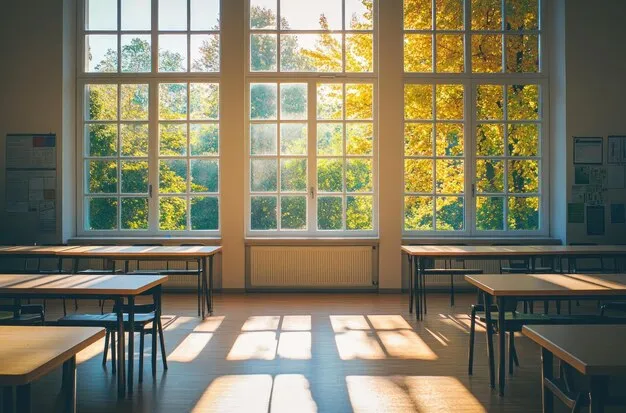
Photo: empty high school classroom summer sunlight through windows, via img.freepik.com
There's a moment on the Fourth of July that tells you everything about Harborview High School. The parking lot is half empty, the flag is up, and somewhere in the building, a junior named Priya is working through a calculus problem set in an air-conditioned classroom while fireworks get stacked in a field two miles away.
Nobody made her come. That's the whole point — and the whole controversy.
A School With No Off Switch
Harborview, a public school in a mid-sized district that officials asked us not name precisely while the pilot program is under review, made a quiet promise three years ago: the building would never close. Not for summer. Not for winter break. Not for the random Tuesday in October when every other school in the state goes dark.
The doors open at 6 a.m. and staffed programming — tutoring, clubs, enrichment workshops, credit recovery, a surprisingly popular ceramics elective — runs every single day of the calendar. Attendance is entirely optional. Enrollment in the year-round program is not.
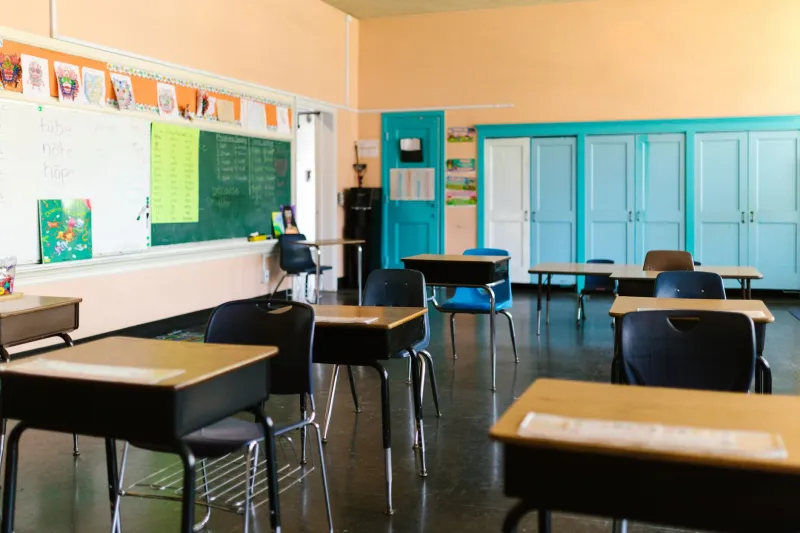
On paper, it sounds like a logistics nightmare. In practice, it looks more like a library that happens to have a gym.
"We stopped thinking of school as a place you go for 180 days and started thinking of it as a resource," the program's coordinator told me, walking past a chemistry lab where two sophomores were doing an experiment their teacher described as "purely for fun, which is either great or alarming."
Who Shows Up in July?
Here's the part nobody predicted: the summer crowd isn't who you'd expect.
Yes, there are students recovering credits. But the regulars are a stranger mix — the perfectionist getting a head start on AP Bio, the kid whose house is chaotic and who finds the building calmer, the senior finishing a research project nobody assigned, and a rotating cast of athletes who discovered the weight room doesn't judge you in July.
On a typical summer day, roughly a quarter of the student body passes through. On holidays, it drops to single digits. On the day after Thanksgiving — a day most of America spends arguing with relatives — Harborview runs a "Friendsgiving study hall" that drew forty students last year.
The district's data is still young, but early signals are interesting: students who use the building twenty or more days outside the standard calendar show modest gains in course completion. More striking is what they report feeling. Words like "less behind" and "less panicked" come up a lot.
The Case Against Never Finishing
Not everyone's buying it, and honestly, the skeptics have a point worth sitting with.
A retired teacher I spoke with — thirty-four years in the classroom, strong opinions — put it bluntly: "Part of growing up is learning that things end. Semesters end. School years end. You finish, you breathe, you come back different. If the building's always on, when do you ever get the satisfaction of being done?"
There's research on her side, too. Rest researchers and even elite sports scientists have spent a decade warning that constant availability breeds constant low-grade guilt — the feeling that wherever you are, you should be producing. A school that's open 365 days a year can accidentally sell the idea that a student who takes the summer off is a student falling behind, even when the calendar says otherwise.
And there's an equity wrinkle. The students in the building in July tend to have rides, flexible parents, and jobs that allow weird schedules. The kids who need the building most — the ones with caregiving duties at home or two shifts at a fast-food counter — are often exactly the ones who can't get there.
What 'Open' Should Mean
Here's where I land after a week of watching this experiment: Harborview's mistake isn't staying open. It's the framing.
A school that's always available is a gift. A school that's always on is a treadmill. The difference is whether the institution treats a closed door as a failure or as part of the design.
The students who thrive at Harborview aren't the ones there every day. They're the ones who've learned to treat the building like a tool — show up when it serves you, stay home when it doesn't. One senior told me her rule: "If I want to go, I go. If I feel like I have to, I stay home and figure out why."
That's a lesson most adults haven't mastered.
The 365-day diploma, it turns out, isn't about attending school every day of the year. It's about knowing — really knowing — that the resource is there, and choosing, freely, when to use it. The students who show up in July on their own terms might be learning the most valuable thing in the building: that access and obligation are not the same thing.
The rest of us should probably take notes. Then take the weekend off.